Joy Gems

Stargazing and other apathy antidotes: How toddler me is teaching me about delight, curiosity, and mental health

NOTE: This was originally posted on my Substack and I will only occasionally repeat those pieces over here. PLEASE be reminded that my Substack is free and you can access it via your browser, no need to download an app. If you have a moment and could go over there and engage with some of my material, I would appreciate it.

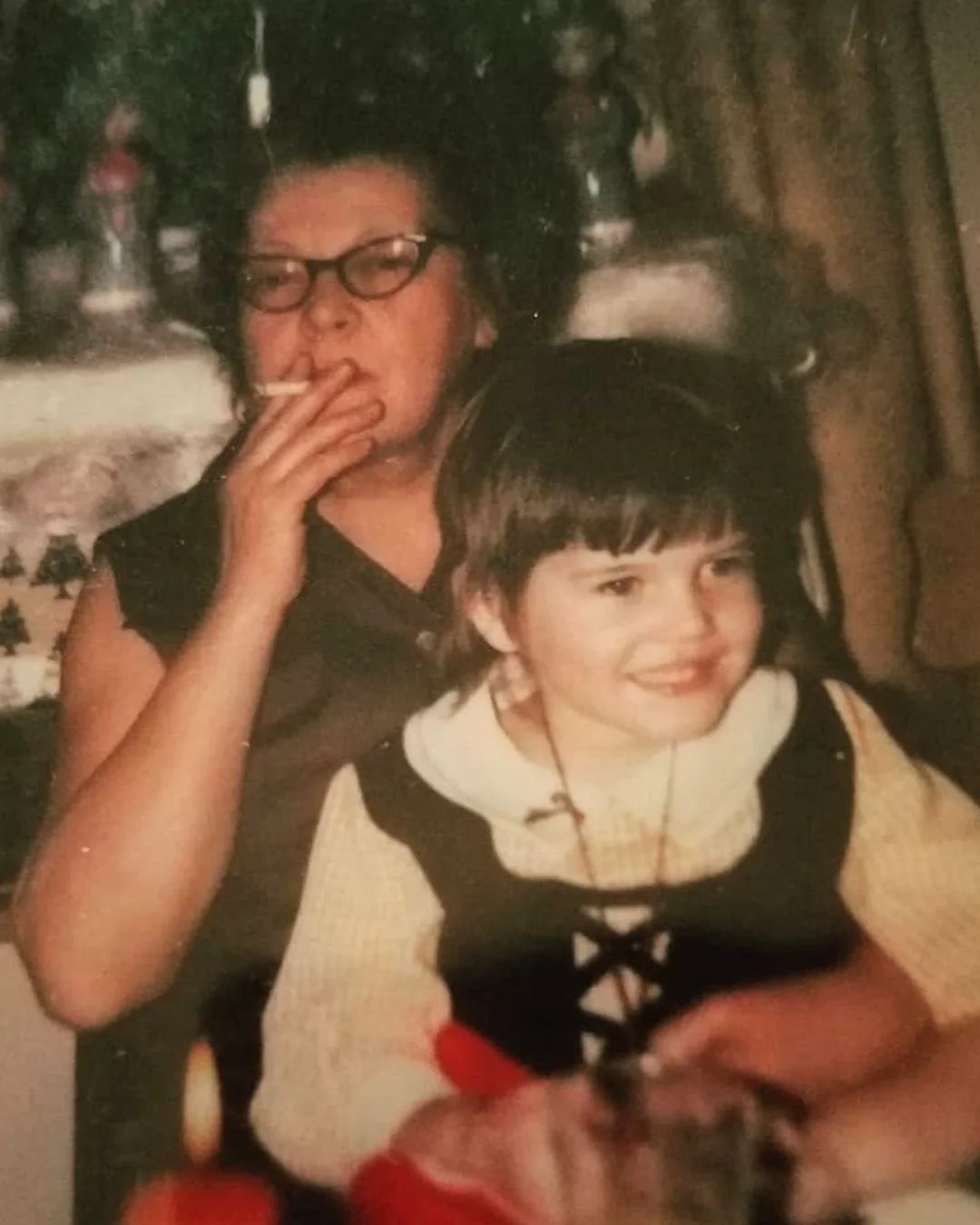
I have this memory of myself around the age of three and a half, and I think residing inside this memory is the blueprint for my happiness. I might even assert that it’s the blueprint for any human’s happiness.

I am outside, by myself, standing under the night sky. (It was the early 1970s… kids were free range… perhaps to the extreme but it was what it was.) The full moon is sitting high over a field across the street. It sits nestled in a blanket of stars. And I am just, well, star struck. I am in awe. I can feel this feeling in my body to this day.

I am still that little girl every single time I see the moon. Maybe you feel the same. It’s like the moon is new to us every night. (Side note: If you do feel the same, you might be shocked to find out that not everyone feels like this. There are people who barely notice the moon. I know! It’s really quite terrible.)

Fast forward and I am 11 years old and I’ve saved up all of my birthday money and allowances to buy my very own telescope. Seeing the moon’s surface, I am speechless.

Fast forward again and I am in my 30s and I own the house outside of which I sit on a stoop in snow pants in the middle of winter so I can gaze up at the moon and Orion (my fave).

Now I live in a city with too much light pollution and I am sad. These things are not unrelated.

We are going to be changing our circumstances soon, but it has taken me about six years of living here to understand all of the ways I have cut myself off from my toddler self and her connection to the moon and the natural world and what that cutting off has meant for my mental health.

My mental health (and probably yours) is complicated, of course, by our current political situation, but really… I know I would be handling even that much better if this toddler self were being taken care of.

She lives off of awe and fascination and curiosity and intense noticing.

And that… that right there is the blueprint.

The disease of apathy

I’ve written about the part that despair was playing in my depression, and I am relieved that I am no longer that stuck, but I am still somewhat stuck. Like before I was in quicksand (and hello!? Where is all the quicksand Gen X was warned about!?), and now I am in some regular old mud… maybe to just below the knees.

That mud is my apathy.

I am doing things but I’m not feeling great about those things.

I am doing things but I’m doing the bare minimum.

I am doing things but I’m no longer dreaming.

And that right there is awful. My dreaming muscles used to be so strong, and they were strong enough that they led to actions and to the building of those dreams.

I used to believe in the beauty of life and in my capacity to create beautiful things.

But the last decade has been so hard. There is the political reality we’ve all been living within, but on a micro/personal level, I’ve gone into full menopause (anyone else?); I’ve lost my soul cat at the age of 9 (far too young and it was sudden and traumatic); I went through two years of living with, treating, and healing two frozen shoulders (yep, one after the other) so my overall movement got smaller and smaller, and there was more, but you get the idea.

The depression cycle was bad.

There are remnants and bad habits left behind.

The biggest remnant and bad habit is the apathy.

How I noticed it

I hadn’t really… noticed it, that is. It had/has become such a regular feeling and state in my life.

I have started to wonder, is this it? Is this how life gets as we age?

I recoil from those questions. I refuse those questions even as I find myself constructing them.

None of my old tricks were helping. None of the old routines were kicking in. Nothing I was doing was working, until I started to pay attention to someone whom I’ve known of since I was writing my Blisschick blog about 20 years ago ((what!??!)): Andrea Schroeder of Creative Dream Incubator.

As a teacher, I often find myself lacking mentors because I’m so focused on self directed learning and the creation of my classes and methods for my students.

But as they say, when the student is ready, the teacher will appear.

I finally signed up for one of her smaller courses, Project Miracle. I ran through the material faster than the 30 days it’s intended for but I couldn’t help it. I could feel the energy building and I was… what is that feeling???… excited!

The miracle I was working on was simply wanting more positive energy in all its forms — physical, emotional, and spiritual. That’s how deep my apathy had become — that positive energy would feel like a miracle.

How the energy showed up

It’s always in some unexpected way, right? We ask for one thing but get something that seems to be not it and then it turns out to be exactly what we needed.

For quite a while now, I’ve been trying to get movement in first thing in the morning. I got to the point where I gave up because nothing I tried was sticking. I just couldn’t. It started to feel like I was bullying myself. The resistance was that bad. Staying in bed later than I wanted to, cuddling with Begonia cat, happened every day no matter the systems I set up.

Then a little over a week ago, Andrea asked this question in one of the Project Miracle units: what are you willing to change to get what you want?

I kept reading/hearing it as: what are you willing to give up?

Finally, from deep inside me, I got a very clear and loud answer: APATHY.

I called myself out.

I don’t know what was different about this time… not exactly. I know that I had done a lot of introspective work with Project Miracle but the miracle of it all was the way it just suddenly! Poof! Change!

I got up easily the first Monday after that and walked almost four miles right off the bat.

Crazily, I immediately could feel how cemented in the change was.

The results of this “small” thing keep accumulating: my brain is clearer; I’m giggling more; I want to move more (which is more normal for me); life feels… good.

More anti-apathy work to be done

But I also know this is just the beginning and I’m working another course with Andrea to keep my mind focused in the right direction.

And I’m looking for other anti-apathy tools. So let’s start a list, shall we? I would love for you to add to it, but here’s the beginning:

  • Notice a time in your life when you were young and you were so full of yourself, meaning you were who you were born to be. Notice what she loved. Notice what sparked her joy. Is there a blueprint in all of that for you?

  • Start doing the things little you loved to do, no matter how ridiculous you may feel. Like me getting roller skates a few years back. I sucked but I did it anyway. (Then the frozen shoulders happened.)

  • Add in little things like checking the moon every night. Put reminders on your phone if you need them. It can be hard to remember on our own when we’ve not been doing these things.

  • Make lists of things you love. Do this every day. For example, I’ve restarted the practice of a joy/sanity list on my socials every morning. I used to do bliss lists long ago and people would comment how much they meant to them. This has started to happen again. (Ripples!)

  • Go outside more.

  • Go look at art wherever and whenever you can.

  • Listen to more music. Listen to favorites from times in your life when you felt good but also find new things. (Each of those approaches does amazing and different things for your brain.)

  • Ride a bike. Really. Find a hill and go down as fast as you can. (Or find another equivalent of this type of activity.)

  • Sit by water as much as you can. (There’s too much research on the efficacy of this to ignore it.)

  • Look around at the people in your life and do not be afraid to notice who is bringing nothing but negativity to your spaces. Clean house. (I don’t mean to sound cruel there but life is short and we know it’s important who we allow in to our inner circles.)

  • Be cautious of what you’re watching and reading. Feed your brain and heart with things that grow the states of being you want to experience. I’ve written about Japanese healing fiction and now I’m into my third novel of that nature and I am more in love than I thought I would be.

  • Pick something small to focus on learning. I was just reminded the other day of a summer that I spent in my backyard in Erie learning all the different sparrows. There are so many and there are often very small differences. But this seemingly tedious differentiation task made me feel connected at a new level.

For now, that’s enough from me. Like I said, I’d love to hear from you. And I’m sure I’ll be writing more about this soon.

Re/Joy: Slow Summer Update

As I wrote yesterday, I’ll be creating daily categories for the blog, and Tuesdays are about a process that I, quite a while ago, named the Re/Joy Project. There will be a lot more about this in the near future, including a podcast, but for now a brief explanation:

The concept of the Re/Joy Project is simply that we can create a process (one I’ll share over time) to reintroduce deep joy into our lives regardless of what’s happening. We’re big enough internally to do this sort of process even in the midst of grief.

The process is based in noticing and naming.

For this summer, I’m re/joy-ing by exploring the idea of Slow Summer.

I’ve always had a difficult time transitioning from the quiet of winter into the louder and more frenetic energies of late spring and summer. Suddenly everything is just SO MUCH! And most humans seem to think that we must fit in ALL THE THINGS in this bit of time when our bodies really want to be slow and languid. I mean, there’s freaking HEAT… stop moving around so much ((ha)).

Besides the sticky expenditure of energy, I feel like we miss a lot running from one activity to the next, running to “vacation,” running to another picnic or party. People seem so damned stressed in the summer and it seems like it should really be the opposite of that.

Thus, Slow Summer 2023.

For starters, I’ve made sure to make more time to sit in the backyard under the trees and with our new baby gardens and read. I also just sit and breathe and listen to the birds.

And though it might sound intrusive, there is a very large construction site about a block behind us… I can see it through a space between the houses behind us… anyway, the smell of cut wood drifts to me and that brings to mind my paternal papa who was a finish carpenter.

It’s all utterly delightful.

What ways could you create slow in your summer?

What will you regret?

I’ve told these two stories before but they’re important to me. They’re what I call “joy gems.” They’re touchstones and talismans.

One of the my favorite memories: I am about 4 and I am staying with my GrandAunt Ardelle and she’s in the kitchen making us dinner. I’m singing about that fact. When I stop, she yells, “MORE!” and I hear her laughing her laughter that was so full of love.

Another with her: I was about 13/14 (she would die when I was just 15) and we are visiting. I am sitting on the small settee with my mother, and Ardelle asks me what I think I want to be when I grow up. I know. My heart is full of it and has been full of it since I was so small, but I say, “I don’t know” and shrug in that teenager way, and she says, “OH! I always just thought you’d be a singer!” So offhanded, so SURE sounding.

I took those words and those memories and I stored them. Over the years, I learned to hide this part of me… this part of me that was pure and raw desire.

But I got too good at hiding it and the thing I loved most in this world — even more than dance (but thank God for dance) — this thing I loved most became this thing that I feared most.

I sing but only by myself in very limited and hidden ways.

And I lay awake at night some nights and I KNOW this is what I will regret.

I will regret this hiding of my voice… a hiding of a singing voice that results, of course, in a hiding of my larger truer voice in this world.

I think, even my writing voice is not yet my truest voice because I hide my song.

No more.

Monday the 14th at 5 PM I have a voice lesson — a half hour assessment to meet a teacher and see if we can work together and then I’ll start weekly classes.

Thinking of this MAKES. ME. WANT. TO. PUKE.

I want to cancel. I won’t cancel.

I think I might die. I probably won’t.

My heart races and my skin gets clamy even at the thought of this half hour on this coming Monday.

But I will go and I will report back.

And I want to know from you: what will be your regret? What small movement can you take toward eradicating it?

Despair and joy and exhaustion and curiosity

Dancer: Rachel VanDyne

I’m feeling a lot right now, but it’s all rather paradoxical. As I teach in the Peony Method, we can and must hold these paradoxes.

There’s no either/or in our existence or in our emotional lives. When we want to either/or ourselves like that, I guarantee it’s a sort of emotional bypassing — a desire to feel just “good” and push away more difficult things.

Because it’s always both. Always. We can feel good but we also feel like the world is falling apart. We can feel sad but the kitten is making us laugh.

Right now, I’m feeling both joy and curiosity about a bunch of things, including, of course, tennis and slow jogging. Both of which are definitely at the obsession and special interest level which makes not only my body happy but also my brain.

Right now, I’m also feeling despair and exhaustion. For more reasons than I care to articulate but for one tiny example…

I just watched a (“whyte spiritual”) woman on TikTok try to say that Kanye West’s blatant and violent antisemitism is really his Christ enlightenment shining through and he’s trying to elevate all of us. (WHAT the actual FUCK?)

That makes me, first, want to vomit (for real… it made me sick) and second, to start lecturing everyone about the pre-Holocaust days in Germany but it also makes me want to just shut down.

Despair and exhaustion are dangerously enticing for us, aren’t they?

As a GenXer in particular, it’s easy for me to roll my eyes and say whatever to almost anything. I think that’s true for a lot of us.

We learned to survive via a certain kind of apathy. (Which wasn’t really real. We care almost TOO deeply and have felt so powerless that we decided to pretend not to care.)

As I write this, I am thinking through this. I don’t have answers. I don’t have any sense of a pathway out of this.

I have only some… inklings.

First, I trust Mr. Merton there in that quote. His conclusions didn’t come from some idealistic monastic life. He lived through very difficult times historically. He was someone who was constantly questioning all ideas and even more so himself. He dug deep and he traveled wide, always open to wisdom coming from anywhere. He was a student of many Eastern philosophies, and though he remained Catholic, all of that informed his utterly mystical views of life.

All that’s to say, I think he was onto something with this hope thing.

But second, notice his language.

This is not some esoteric or ethereal hope.

This is active hope. Aggressive hope.

And it’s not just abstract hope. It’s concrete hope as acted through our very concrete human bodies.

Which brings me to this thing that’s been floating around on my front page and in my hashtags for quite some time and in my brain for even longer — what I call the Re/Joy Project.

I have notes upon notes upon notes about this concept but the other day I said something somewhere that gave me the piece that I think we need right now.

What would happen if you were simply, day to day, moving through life with a curiosity about joy?

I think that phrase — curiosity about joy — takes away pressure and replaces it with some sense of breathing space and freedom.

But I think it matches Merton’s “trampling down with hope.”

They’re both active.

Curiosity about joy says that joy is not some magical thinking way of living waiting for you to just stumble upon it or suddenly feel it or that joy is perhaps just for the “lucky.”

It says you need to go out and purposefully investigate. Search for clues. Pay attention. Always have your notebook and tools at the ready.

I’ll be writing about more ways to do this but for now I’m planting the seed.

Acknowledge and make space for all the sad and the despair and the fear and the anxiety and the anger but don’t forget this other stuff too.

The Scent of the Past

Me with Nana and Pap in Florida

When we’re little, adults often tell us how much we will miss certain people or times when they are gone, and of course, we can’t possibly understand what they mean even when we are a tad bit more introspective than the average child.

We just can’t.

Until we do.

And then it’s heartbreaking.

There are moments in the last few years in particular (is it something about turning 50?) that it hits me (really HITS me) that I will never see or be around my nana, for example, ever again. That that was it. I can’t sit with these feelings for very long. They could easily become overwhelming in a negative way.

For me, a lot of these realizations come with a deep desire to smell something again. Weird, right? But then so much of our memory is tied to smell.

My Great Aunt Ardelle’s house smelled a very specific way. When I used to have a bricks and mortar studio in Erie, it was mere feet from where her house once stood, and once in a while, that scent would be on the wind. It would take my breath away — the flood of memory and the longing.

My papa smelled of fresh cut wood and coffee made in a percolator. My nana smelled of bread, sticky buns, fresh squeezed orange juice, and too many others to list. Together they smelled of Florida to me (even though they lived in Erie for a very long time) and sometimes the weather even in Ohio will make me say to Craig, “It smells like Florida after a brief rain…” and he says, Huh, not really understanding.

My grandmother on the other side smelled of church basements and gladiolas and a scent I can’t name that floated around anything she sewed.

Back to my Great Aunt, she smelled of the old school Oil of Olay which you can’t get anymore… I’ve tried. They’ve changed it too much. And she smelled of Mr. Bubble bubble bath which my sister and I would take in her giant clawfoot tub.

My Great Aunt and Nana both smelled of Christmas… well, the way I want Christmas to smell anyway and a way that it will never again. (And just writing that made me cry.)

There are other scents tied to grade school, especially the little round school I went to in State College for 2nd grade. There’s the smell of waxy crayons and sand from when we’d make those bizarre bits of art with colored sand in baby food jars. (Do you remember those?)

There’s the smell of fresh fallen leaves that every October takes me back to early grade school and certain long ago friends.

There’s the smell of plastic barbie dolls and Christmas gift baby dolls that came every year.

There’s the smell of the cheap paperbacks from Scholastic books and the newsprint that was the order form.

But mostly, to my point, it’s the smells around those people who were our whole worlds when we were little, so many of whom we’ve already said goodbye to.

When we’re little, we just can’t know. I think we’re built that way on purpose. The knowledge of so much coming heartache could easily steal joy from the little people we were … as yet unequipped to process that kind of loss and still so full of trust that it all will just go on and on…

Empathy isn't just for the hard stuff...

(I wish I could find the study I was reading because it was important but you know how … SQUIRREL!… And I’ve tried to find it again and just can’t. If I do find it some day, I’ll come back to this and update it.)

Onward… I was reading a study recently that came to the conclusion that perhaps — perhaps — almost 50% of the human population lacks the brain connections for true empathy.

Read that and weep. Or not.

If that stat is even close to true, it explains a lot about our world. It explains a lot about the seemingly endless struggle between people who focus on their own concerns and those who wish to better the world for everyone. (To put it all in compact and polite terms.)

That’s the macro look at it, but on the micro level, it can explain struggles we have with family and friends and even strangers when it comes to understanding motivations, the extension (or not) of care, the tangles we get in to over expectations, and on and on.

We are truly playing with different decks.

But with all of that, I bet in your mind, you’ve been focusing on the idea of empathy around difficult challenges.

There’s more to empathy than that and I’ve always sensed it but didn’t have the language for it.

It’s something I have been conscious of doing in my work since the beginning. I intuited that a huge part of what I do is really about making space for people to feel their feelings including BIG JOY.

That picture at the top… I love that moment between the two women on the right (Mara and Julie). They aren’t talking. They are simply finding shared joy in their playful embodiment.

Turns out there is language for this: Empathic Joy.

You can listen to a short podcast about the science of it right here.

Science, schmience… as usual it comes from an ancient philosophical/”religious” system: Buddhism.

And in Buddhism, it’s a practice. Of course, it is.

Mudita: sympathetic or unselfish joy, or joy in the good fortune of others. In Buddhism, mudita is significant as one of the Four Immeasurables.

(The other four immeasurables are: love, compassion, and equanimity. You can read more about them all over here.)

When someone gives us good news, do we start to think about our own lack of good news or are we just totally present to them, reflecting their experience back to them?

When we see a happy person out in the world, does that make us feel grouchy or judgy? Or do we take the opportunity to feel good with and for them?

This is the practice: all day long, watching for those moments of knee-jerk reactions that are grounded in jealousy or malice and checking them and replacing them.

I love this.

Joy Gem in the City & The Function of Memory in a Happy Life

I’ve written about this idea that I use in movement classes called “joy gems,” in which I ask you to remember in great sensory detail a happy moment from any time in your life. This stuff is important for healing trauma on a neurological/biological level. You can read more details about how this works here.

This is a share of a joy gem of my own with some thoughts on memory…

Moving into this house in this part of this city has felt like a string of miracles or coincidences or whatever you want to call it.

So much had to go right, had to be just right.

Now if you weren’t around during this or if you just didn’t hear me talking about it, when we walked into this house, I knew it was for us. Immediately.

But later it struck me that I knew that because it had the energy of one of my favorite houses of my whole life — the house of my GreatAunt Ardelle in Erie.

I can only note that the past is beautiful because one never realises an emotion at the time. It expands later, and thus we don't have complete emotions about the present, only about the past..jpg

She was a special human. (Some day, she deserves a book (or two) written about how special and all the things she taught me, whether knowingly or unknowingly.)

One of my favorite things when I was very little was getting to spend the night at Ardelle’s. I would sleep on her davenport right off of her bedroom. The front of the house was visible as the whole thing was quite open and the front big window opened onto what was one of the busier roads in Erie.

I would lie there, not sleeping, watching the lights drift across the ceiling as cars drove by.

When I was little, there was something so very thrilling and also so very soothing about this.

The other night, here, in Columbus, 52 year old me could not sleep, so I made my way to our front room and laid on the couch, facing the big window that looks out toward the street.

Suddenly, the car lights were washing across the ceiling…

I had not noticed this before. I hadn’t thought about it as a possibility.

And there it was… like a beacon from little, 4 year old me…

As I was getting ready to write about this, I decided to look for a quote about memory and one of the first to pop up was this, by one of my favorite authors:

“I can only note that the past is beautiful because one never
realises an emotion at the time.
It expands later, and thus we don't have complete emotions about
the present, only about the past.”

Virginia Woolf

There is so much truth in what she says.

If you doubt, just think back to a day that was uber special — a wedding, a birth, anything of great significance — and think about how difficult it can feel to be truly present to it. How it’s so very overwhelmingly wonderful that it can almost feel like you are missing it as it is happening.

But later, LATER, looking back… there it is.

It’s this looking back at these sorts of moments that can heal us. And I think it’s a large piece of the puzzle of healing that can be missing, as we take so much time to “unearth” and “understand” and “process” the difficult things that have happened to us, which is important, but not more important than this… the work of constructing a memory edifice of light and love.

Choosing Joy: It's not trite

206628387_849165766011789_2582480725971940145_n.jpg

This is taking ultimate responsibility for our lives. It's hard and sometimes I just want to throw a temper tantrum and say NO! I'M EXHAUSTED!

Sometimes the reality of this power we hold as individuals just makes me mad... why can't someone else do it!?

Choosing joy is not trite. It’s not about giggles or excitement, though it can be.

It’s something so much deeper.

If you’ve suffered from any sort of depression or anxiety, all of this can feel even more difficult and almost… cruel, right? Like how do we DO THIS in light of those mental health challenges especially?! When we barely have the energy to get out of bed, how do we choose joy?!

In light of those challenges, it’s actually more important that we become conscious of the fact of this choice.

In bed, when we are struggling, can we look around for even a hint of joy that could motivate us?

If you’ve known me for more than five minutes, you know that would be the sight of my cat, Peony.

When I’ve been in some of my darkest moments in this human form, the thought of that cat… the purrs of that cat, have saved me.

Joy has saved me.

Do not look for rest in any pleasure, because you were not created for pleasure: you were created for spiritual joy. And if you do not know the difference between pleasure and spiritual joy you have not yet begun to live.
— Thomas Merton