NOTE: This was originally posted on my Substack and I will only occasionally repeat those pieces over here. PLEASE be reminded that my Substack is free and you can access it via your browser, no need to download an app. If you have a moment and could go over there and engage with some of my material, I would appreciate it.
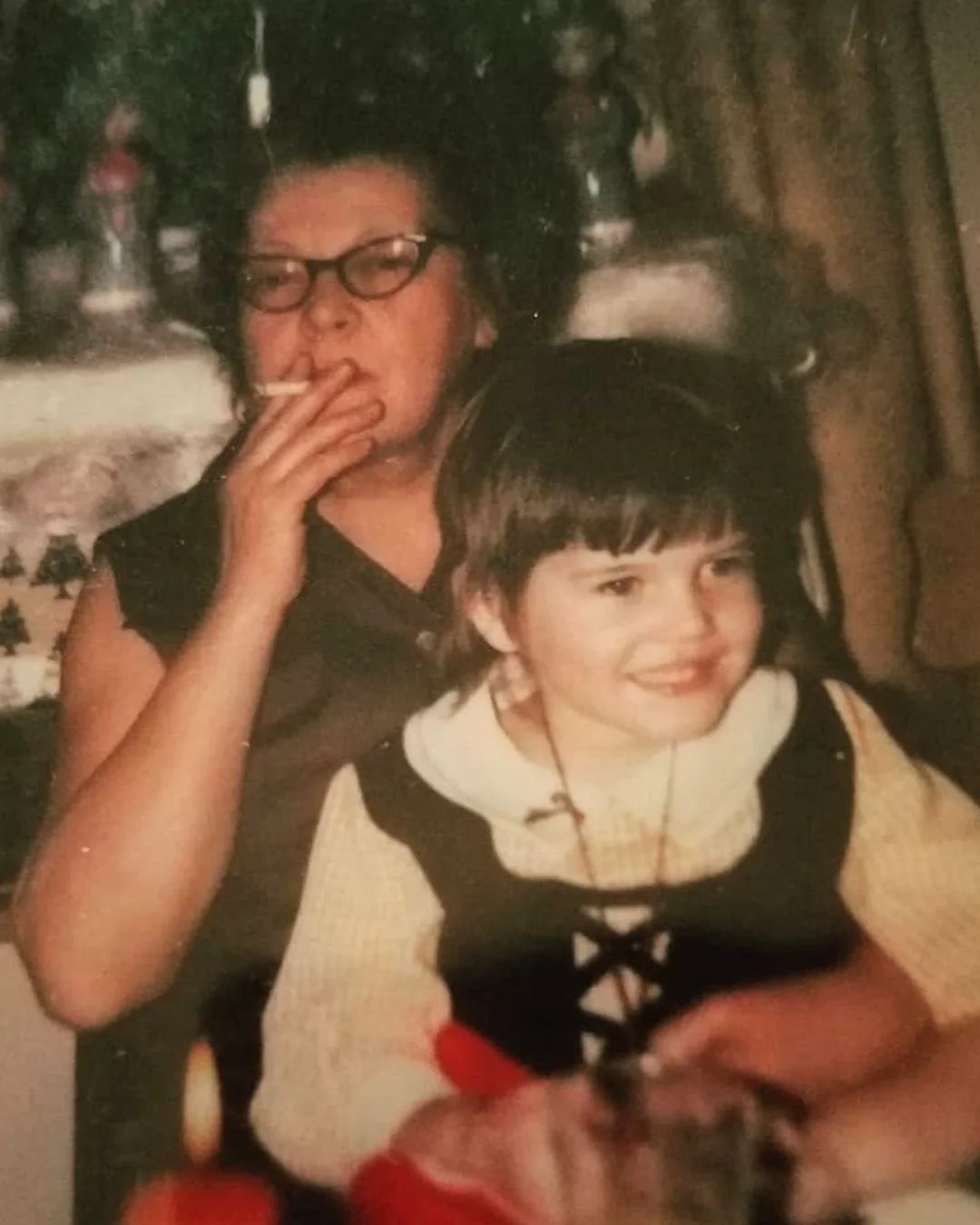
I have this memory of myself around the age of three and a half, and I think residing inside this memory is the blueprint for my happiness. I might even assert that it’s the blueprint for any human’s happiness.
I am outside, by myself, standing under the night sky. (It was the early 1970s… kids were free range… perhaps to the extreme but it was what it was.) The full moon is sitting high over a field across the street. It sits nestled in a blanket of stars. And I am just, well, star struck. I am in awe. I can feel this feeling in my body to this day.
I am still that little girl every single time I see the moon. Maybe you feel the same. It’s like the moon is new to us every night. (Side note: If you do feel the same, you might be shocked to find out that not everyone feels like this. There are people who barely notice the moon. I know! It’s really quite terrible.)
Fast forward and I am 11 years old and I’ve saved up all of my birthday money and allowances to buy my very own telescope. Seeing the moon’s surface, I am speechless.
Fast forward again and I am in my 30s and I own the house outside of which I sit on a stoop in snow pants in the middle of winter so I can gaze up at the moon and Orion (my fave).
Now I live in a city with too much light pollution and I am sad. These things are not unrelated.
We are going to be changing our circumstances soon, but it has taken me about six years of living here to understand all of the ways I have cut myself off from my toddler self and her connection to the moon and the natural world and what that cutting off has meant for my mental health.
My mental health (and probably yours) is complicated, of course, by our current political situation, but really… I know I would be handling even that much better if this toddler self were being taken care of.
She lives off of awe and fascination and curiosity and intense noticing.
And that… that right there is the blueprint.
The disease of apathy
I’ve written about the part that despair was playing in my depression, and I am relieved that I am no longer that stuck, but I am still somewhat stuck. Like before I was in quicksand (and hello!? Where is all the quicksand Gen X was warned about!?), and now I am in some regular old mud… maybe to just below the knees.
That mud is my apathy.
I am doing things but I’m not feeling great about those things.
I am doing things but I’m doing the bare minimum.
I am doing things but I’m no longer dreaming.
And that right there is awful. My dreaming muscles used to be so strong, and they were strong enough that they led to actions and to the building of those dreams.
I used to believe in the beauty of life and in my capacity to create beautiful things.
But the last decade has been so hard. There is the political reality we’ve all been living within, but on a micro/personal level, I’ve gone into full menopause (anyone else?); I’ve lost my soul cat at the age of 9 (far too young and it was sudden and traumatic); I went through two years of living with, treating, and healing two frozen shoulders (yep, one after the other) so my overall movement got smaller and smaller, and there was more, but you get the idea.
The depression cycle was bad.
There are remnants and bad habits left behind.
The biggest remnant and bad habit is the apathy.
How I noticed it
I hadn’t really… noticed it, that is. It had/has become such a regular feeling and state in my life.
I have started to wonder, is this it? Is this how life gets as we age?
I recoil from those questions. I refuse those questions even as I find myself constructing them.
None of my old tricks were helping. None of the old routines were kicking in. Nothing I was doing was working, until I started to pay attention to someone whom I’ve known of since I was writing my Blisschick blog about 20 years ago ((what!??!)): Andrea Schroeder of Creative Dream Incubator.
As a teacher, I often find myself lacking mentors because I’m so focused on self directed learning and the creation of my classes and methods for my students.
But as they say, when the student is ready, the teacher will appear.
I finally signed up for one of her smaller courses, Project Miracle. I ran through the material faster than the 30 days it’s intended for but I couldn’t help it. I could feel the energy building and I was… what is that feeling???… excited!
The miracle I was working on was simply wanting more positive energy in all its forms — physical, emotional, and spiritual. That’s how deep my apathy had become — that positive energy would feel like a miracle.
How the energy showed up
It’s always in some unexpected way, right? We ask for one thing but get something that seems to be not it and then it turns out to be exactly what we needed.
For quite a while now, I’ve been trying to get movement in first thing in the morning. I got to the point where I gave up because nothing I tried was sticking. I just couldn’t. It started to feel like I was bullying myself. The resistance was that bad. Staying in bed later than I wanted to, cuddling with Begonia cat, happened every day no matter the systems I set up.
Then a little over a week ago, Andrea asked this question in one of the Project Miracle units: what are you willing to change to get what you want?
I kept reading/hearing it as: what are you willing to give up?
Finally, from deep inside me, I got a very clear and loud answer: APATHY.
I called myself out.
I don’t know what was different about this time… not exactly. I know that I had done a lot of introspective work with Project Miracle but the miracle of it all was the way it just suddenly! Poof! Change!
I got up easily the first Monday after that and walked almost four miles right off the bat.
Crazily, I immediately could feel how cemented in the change was.
The results of this “small” thing keep accumulating: my brain is clearer; I’m giggling more; I want to move more (which is more normal for me); life feels… good.
More anti-apathy work to be done
But I also know this is just the beginning and I’m working another course with Andrea to keep my mind focused in the right direction.
And I’m looking for other anti-apathy tools. So let’s start a list, shall we? I would love for you to add to it, but here’s the beginning:
Notice a time in your life when you were young and you were so full of yourself, meaning you were who you were born to be. Notice what she loved. Notice what sparked her joy. Is there a blueprint in all of that for you?
Start doing the things little you loved to do, no matter how ridiculous you may feel. Like me getting roller skates a few years back. I sucked but I did it anyway. (Then the frozen shoulders happened.)
Add in little things like checking the moon every night. Put reminders on your phone if you need them. It can be hard to remember on our own when we’ve not been doing these things.
Make lists of things you love. Do this every day. For example, I’ve restarted the practice of a joy/sanity list on my socials every morning. I used to do bliss lists long ago and people would comment how much they meant to them. This has started to happen again. (Ripples!)
Go outside more.
Go look at art wherever and whenever you can.
Listen to more music. Listen to favorites from times in your life when you felt good but also find new things. (Each of those approaches does amazing and different things for your brain.)
Ride a bike. Really. Find a hill and go down as fast as you can. (Or find another equivalent of this type of activity.)
Sit by water as much as you can. (There’s too much research on the efficacy of this to ignore it.)
Look around at the people in your life and do not be afraid to notice who is bringing nothing but negativity to your spaces. Clean house. (I don’t mean to sound cruel there but life is short and we know it’s important who we allow in to our inner circles.)
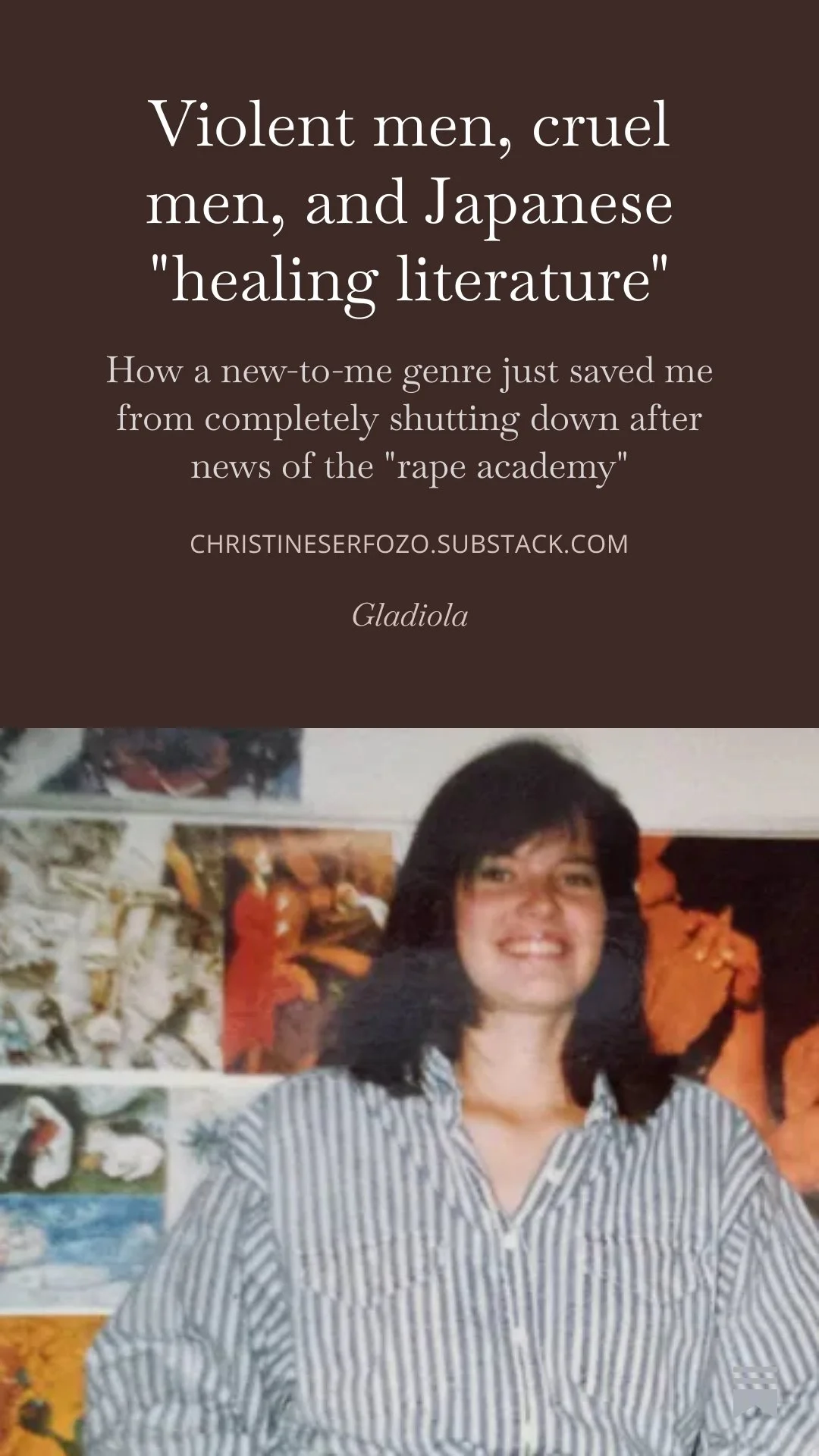
Be cautious of what you’re watching and reading. Feed your brain and heart with things that grow the states of being you want to experience. I’ve written about Japanese healing fiction and now I’m into my third novel of that nature and I am more in love than I thought I would be.
Pick something small to focus on learning. I was just reminded the other day of a summer that I spent in my backyard in Erie learning all the different sparrows. There are so many and there are often very small differences. But this seemingly tedious differentiation task made me feel connected at a new level.
For now, that’s enough from me. Like I said, I’d love to hear from you. And I’m sure I’ll be writing more about this soon.