somatics

The problem of dissociation when "listening to the body"

When the body doesn’t feel safe

The ground of Peony Somatic Dance is breathe and wait. We focus on the breath first to drop into the now and center, and then we patiently listen for or pay attention to the messages of the body. Following that, honest expression can emerge.

But what if when we breathe and attempt to pay attention to the body, we simply can’t?

What if we have a history of dissociation and that is still triggered?

What if it just feels scary to enter the body in this way?

All of these things can drive us away from something like a somatic dance practice. It can keep us from simple exercise. It can prevent us from truly enjoying the sensual aspects of life, because the body does not feel like a safe space.

How do we develop the body as safe space without creating more shutdown and numbness?

How to deal with dissociatioN during movement

There are a bunch of ways to deal with this issue that are more gentle. Over time you can progress through them, but remember, it’s not a ladder. It’s a spiral.

It’s not a simple ladder because if we’ve had a lifetime of dissociative disorder, I don’t think it’s ever just gone. Extreme stress or vile political administrations can certainly bring it back. It’s so deeply embedded in our neurobiology and our body/mind revert to the oldest coping mechanisms because they’re the most “practiced.”

So these new somatic practices are never one and done.

All of this is also why it’s important to work with someone with deep experience. I can tell when a student is distressed even if they aren’t obviously freaking out, for example, and I have a tool box the size of a castle that I can pull from until we find the thing that helps or soothes, whatever is needed.

Peony Somatic Dance methods of the gentle variety

This is just s small example of the tools I would pull from, but it might give you an idea of where to start. (You could also take a class with me, of course, online if you’re not local to Columbus, OH, or you can contact me about possible one on one work if you don’t feel like you’re ready for a class.)

So here are some possible ways of approaching a body that is not feeling safe:

Put all of your attention on your environment. Externalize your awareness. You could put on some music and start to identify items in your space. If you’re alone, you could do this out loud. “Chair, photo, clock” etc. You could add lots of detail if that felt good. As you’re doing this, allow movement to happen but keep your attention outside of the body and the movement.

Touch and name your bodyparts as you move. This is exactly what it sounds like. Moving your right hand? Touch it with your left and say to yourself, this is my right hand.

Attention to body boundaries. Just notice where your body begins and the space outside of you starts. This could be as simple as focusing your movement in your feet and feeling the floor. Or you could get on the floor and move around gently, feeling the feedback from the floor into your body parts. There are a lot of other ways to get this same feedback but moving on…

Place your attention on another body. This is best done led in a class or you can do it with a loved one at home. You can try mirror movement: each of you taking a turn to lead. Keep things really simple. Another option is to start with super simple contact improv like you see in the photo above or as seen here.

Again, there are so many ways to deal with dissociation even when it can feel a bit scary. (And again, experienced guides are so very necessary.)

Let me know if you have any questions or insights!

Dancing through fascism

I liked that quicker, shorter title, but it could also read, Dancing, writing, painting, sculpting, making music, and generally just art-ing through fascism.

Back in 1991, I was living in Chicago, attending grad school at DuPaul. My area of expertise was shaping up to be American literature that arose out of the Holocaust. And it just so happened that the Art Institute of Chicago, late that summer, was putting on a giant exhibition called Degenerate Art.

With a quick search, you can read more deeply about all of this, but I’ll give you a quick overview.

Nazis, of whatever time, are not fans of any art but classical art that supports their idea of culture. So you know, nothing imaginative and certainly nothing that promotes anything but hetero normative ideals. Oh… and white supremacy ideals, of course.

Modern art, in particular, which was on the rise at the same time as naziism, was extra targeted.

Eventually, the man himself (a frustrated artist and small man… like so many fascists) gathered all the modern art they could get their hands on and put together a show of over 600 works.

In order to, well, make people feel angry about the art, they did a couple of things. First, they crowded the walls with it, creating a sort of sight chaos.

Second, they let in too many people at once, herding them through tight lines. And third, they cranked up the heat.

When the Art Institute decided to put on this show, they found as many pieces as they could from the original. They didn’t overcrowd the people or turn up the heat, of course, but they did display them more like the original show so we could get an idea of what it was really like.

And to this day, there’s rarely a month that goes by that I don’t think of that exhibit. And now especially, there’s rarely a week.

It can feel like the arts need to take a backseat during times like we’re living through.

But if you look at history, it begs to differ.

If art weren’t fundamentally important to the human soul, would H1tler and his crew have gone to all of this trouble to degrade it?

No. Of course not.

All of the arts have the potential to expand our minds and hearts and to, most importantly, expand our empathy toward those not experiencing life like our own. Art teaches us about our humanity. Art teaches us about the beauty of diversity. Art teaches us that complexity is a gift.

And therein lies the danger.

As one of the sickest humans ever to be quoted just recently said (and I won’t name him), don’t get caught by “the sin of empathy.”

I am familiar with the mind gymnastics that people will go through to make that make sense for themselves, but they are wrong, period. It is an immoral sentiment. They are taking all that is good about Christianity and deforming it in the name of their own fears and their own small hearts and minds.

Art challenges us and it calls out parts of us that need to be worked on. It forces us to face our shadows so that we might fully delight in our joys.

So yes, we must dance through fascism.

And dancing, in particular, is extra important in that it keeps us grounded in these bodies and in this world right here and right now, rather than committing the grave error of thinking that we should be focusing on something that (might/maybe) come after we die.

That’s what it comes down to: fascism is death and art is life.

Brains, Memories, Energy, and Menopause

My 40s were absolutely fab. And there are a bunch of reasons that many of us are not having great 50s, including the orange clown entering our lives in 2016 and then the pandemic and more of that circus recently. But apart from all of that, from what I’ve gathered from older women, the 50s can definitely be a rollercoaster ride.

This is your reminder that if you follow me on Facebook and/or Instagram you’ll be getting new, weekly, free experiments.

On average, it’s when full menopause starts. And I say starts because that one year mark is just the beginning. Like our teenage puberty, menopause is really years long. Things take time to settle.

I’ve been noticing energy and brain changes, but what’s really been getting to me is the pit-of-my-stomach, visceral (different than ever before) understanding that I will not, for one example, ever smell my nana’s house again. It really punches me in the gut when I think about it.

I’m not someone who has been living in de-lu-lu land about such things but my 50s have brought them into my consciousness at a new level.

It turns out there’s plenty of reasons for this.

Thank God for the wisdom of Katy Bowman, right? I was lucky enough to meet her and take a workshop with her about basic biomechanics years ago, and I feel like she will always be one of those scientists who brings us gold mined from her own life experience.

As she has been in perimenopause, then, she’s, of course, been figuring shit out.

Like the very likely reason behind our brain fog and how much it’s really about us — in this toxic productivity culture — not listening to and sinking into these new bodies and minds that want to teach us new things. Like paring down. Like cutting back. Like freaking resting now that we are where we are.

Listen to or read the whole podcast here. Really. It’s worth your time. I’m still thinking about it and hoping Katy will write a freaking book.

Force versus joyful challenge

A little backstory

You know I started going to Orange Theory because I needed a serious kick in the ass when it came to my commitment/devotion to movement. I needed something outside my usual box. I needed an environment that helped me to do the thing, and Orange Theory covered all the bases.

If I signed up for a class and missed it, it cost me money, so I was always motivated to get out of bed and freaking go. When I got there, the music was fun and I didn’t need to think about anything because the coaches just tell you want to do. It was the perfect blend to keep me working harder than I had in a couple of years.

Let me emphasize this: I did need this to get me moving in the right direction.

And enter: Force

But one of my defaults is to push too hard. I have to watch for it, because it can happen so easily and so suddenly and I can justify it to the moon and back.

Eventually I was going to Orange Theory four times a week. On top of teaching a lot and doing other classes for my Yoga Teacher Training and playing tennis.

I was exhausted all of the time and “couldn’t figure out why.” ((hahahahaha))

I can be slow. ((even bigger laughter))

Eventually I figured it out. I cut my Orange Theory back to twice (and often once) a week. I almost quit altogether but I really do like the community there and have made some friends, and I figure in the winter, I’ll go more.

But that’s not the point of this post.

What’s wrong with force?

Isn’t force just big willpower? Lots of trying? It can be… I guess.

I think force comes into positive play when, for example, I’m deep in depression. If I can manage to force myself to do the things I do not want to do, well, it’s really a sign of hope, right? That kind of force shows that my willpower brain isn’t totally broken yet by the depression and that I am going to be able to drag my ass out of it (yet again).

But often force is just a sort of self inflicted violence.

When we work with force in our bodies, we’re definitely (most often) disconnected from our bodies. They’re a thing that we’re trying to change or contort. A lot of times, movement in this context is pure punishment.

This creates a toxic internal environment on the chemical level.

When we approach change from this kind of force, we’re stressing the nervous system, releasing cortisol, and keeping the body in a dysregulated state.

Change will not come in this state.

Your body is going to work against you, mistaking you for the enemy. Or not mistaking you… because when you’re treating yourself like this, you actually kinda are the enemy.

So what about joyful challenge?

The body knows the difference. Period. Your state of mind is different and so you’re more likely to create the joyful chemical stew in the brain that your body needs for healthy change.

If you approach your movement from a place of play and curiosity and experimentation, you are not working from punishment.

This is the state that regulates the nervous system. It’s from this state, that you’re clear on your motivations and they’re of the healthy variety.

When I’m working with force, my motivations are definitely aesthetic. That’s poison for me.

When I’m working from joy, my motivations are all about my mental health. That is my sweet spot. And most humans’, for that matter.

When we work from joy, compassion, and care, we’re not not challenging ourselves. It just is healthy challenge. It’s sustainable challenge.

The results

Since I’ve recalibrated my movement practices back to joyful and devoted, I already have noticed the kinds of changes I really need:

  • I have more energy, of course. Because I’m not killing myself in the name of, again, aesthetics.

  • I am getting stronger and more balanced by the day because I have more energy to work harder when I am working. I’m not just dragging myself through my practices and hoping for the end.

  • I am happier. This is the big one. This is why I do the work I do — for myself and for others. It’s always been about mental health for me.

I’ve worked really hard to overcome disordered eating and body hatred from my youth but they can still pop up. It takes constant vigilance, and even then, it can be so easy to slip back into old habits.

We teach what we need. I learn that over and over and over.

Peony Somatic Dance: the basic parts of a class

I’ve put together all the shorts that Linda Soto, Jillian Hynes, and I made to demonstrate the first half of a Peony Somatic Dance class. They’re all in one 5 minute video now on my YouTube channel.

You will also see that I’m building new playlists of free material. Soon there will be an entire playlist of shorts demonstrating basic somatic movements. It would be awesome if you would subscribe. (Thank you!)

And here’s the new complete video:

The reality of commitment and consistency and why most people give up

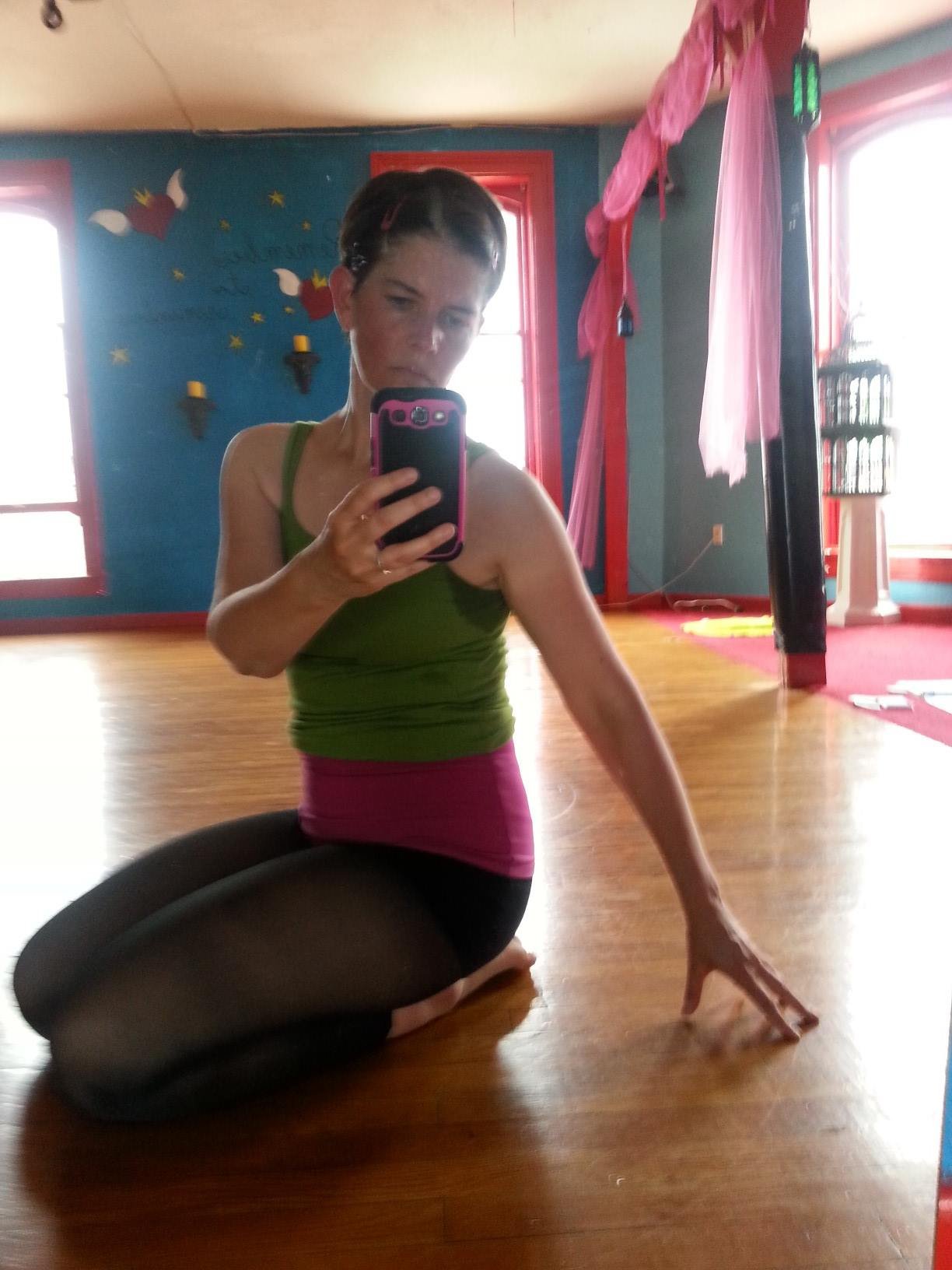
This photo is from about ten years ago (and my hair is dyed so no, I didn’t go silver that fast).

A lot has happened since I took that photo (I mean… I’m taking it from a mirror which tells you a lot has happened even just with phones… ha).

A lot has happened since I took that photo. That, my beautiful nutbags, is a huge understatement.

Even if we only look at the “pandemic years,” so much has happened.

Above it all, the thing that has stunned me the most and has had the biggest impact on this body and mind:

Deep depression like I thought I would never see again came back, and yet again, ate all of the things that are my healing.

Sure, I continued to teach movement but I wasn’t wholeheartedly engaged. I was mostly going through the motions, which you may or may not have noticed. My depression was obvious in general, but I think when I was teaching, you could almost believe I was okay.

But I wasn’t creating any new methods. I wasn’t reading about movement or watching videos or seeking new movement. Big red flag.

I wasn’t listening to my favorite music when I wasn’t teaching. Big red flag.

And biggest red flag ever: I was only dancing when I was teaching and that wasn’t a lot.

Re-enter commitment

I am not sure exactly when it happened, but at some point in the last year or so, that depression started to lift. I think it had a lot to do with returning to playing tennis.

Which makes sense. The first time I seriously kicked depression out the door was when I started to dance again at the age of 40.

It seems I need some sort of return — specifically (and totally unsurprisingly) — to something physical that I have loved in the past.

I got obsessed with tennis. OBSESSED.

And it broke something open inside of me: my body was relearning commitment.

And finally consistency

But tennis is only during the good weather. (Alas, it’s too expensive around here to belong to a club.)

So I waited for the season to start again and started pretty much from scratch at rebuilding my skills.

But my obsession with tennis eventually led to consistency.

I realized I needed to be doing something more tennis-like (as in INTENSE CARDIO and lots of fast twitch muscle stuff) during the bad weather months, which made me do something I did not want to do: join some sort of gym.

I did this thinking that I would quit once tennis season started because I was only doing it to stay ready for tennis, right?

But surprise! I found the thing that created the consistency on top of the commitment. I found the thing that I am willing to get up early for, that I am willing to push myself into discomfort for, that I will not stop now that it’s summer.

Finding Orange Theory was a literal life saver (if you understand how life threatening serious depression can be).

And not because of the Orange Theory workouts. Not at all.

Finding it was a lifesaver because it supports me to do the things that are my life saving medicines.

Not only am I already, I think, showing signs of being a better tennis player this summer than last (and we’ve only played a handful of times so far), but it’s impacting my dance. It’s given me my strong legs back and my balance and of course my stamina.

And it’s only going to get better.

But here’s what I really want to say to you:

Commitment and Consistency for the Win

It takes time.

I don’t think I’ll really start to see the depths of change I want to see for another few months, and I don’t think I’ll be back to the strength and agility I had in that photo for probably a year.

And this is where most humans fail: once they don’t see the change they want within a short period, they quit. And then they blame whatever they were doing but it’s really the lack of commitment and consistency.

This is a long game, folks. As in, for the rest of your life.

Settle into it. Give into it. It’s the only way.

Three more somatic techniques for nervous system regulation

(You can review the first three somatic techniques of spinning, jumping, and shaking.)

As I wrote about before, somatic healing techniques are embedded in a Peony Somatic Dance class from the first breath to the last bit of movement. We aren’t always doing them in a strict “here is this somatic move” way.

So for this series, I’m breaking them down and talking about the effectiveness of each.

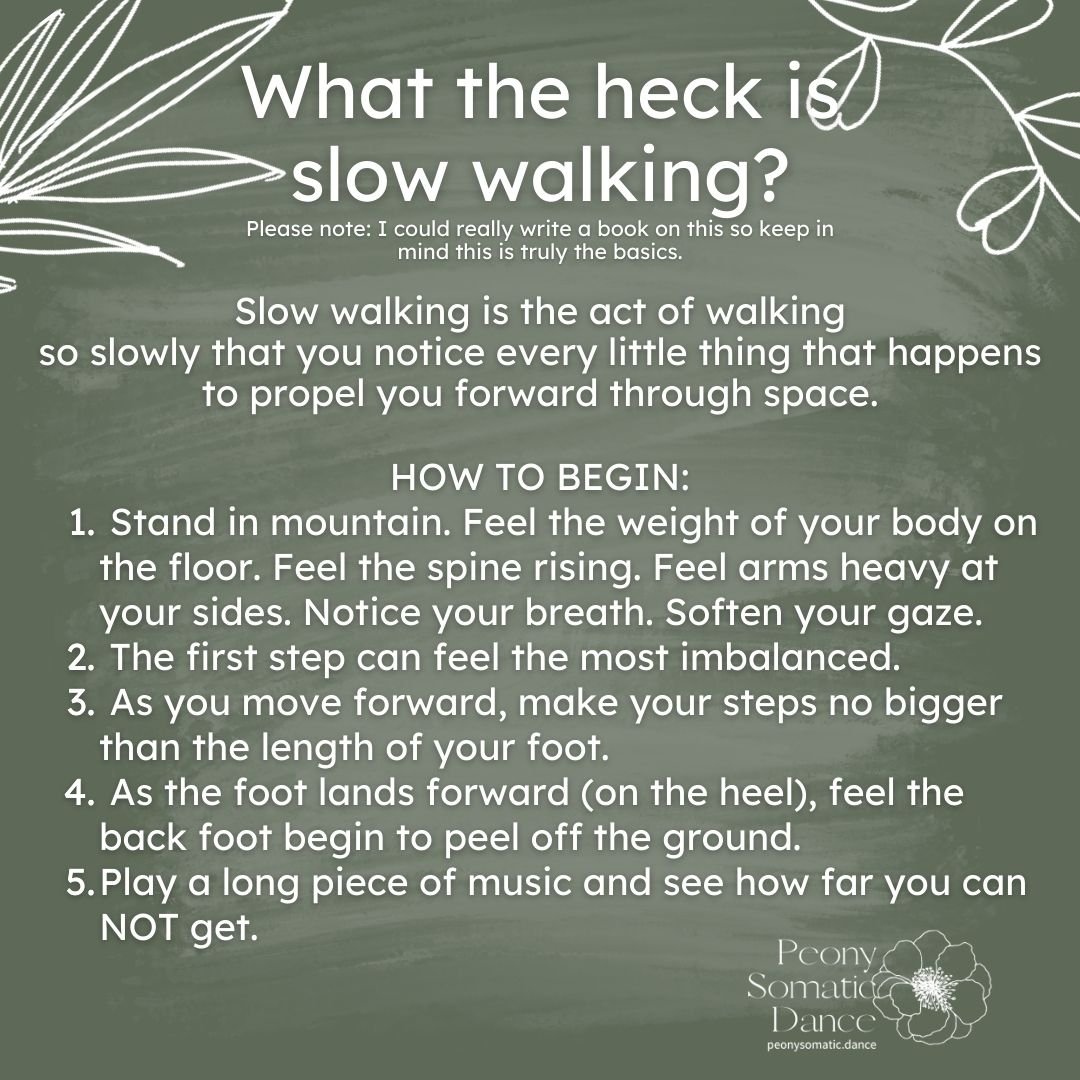
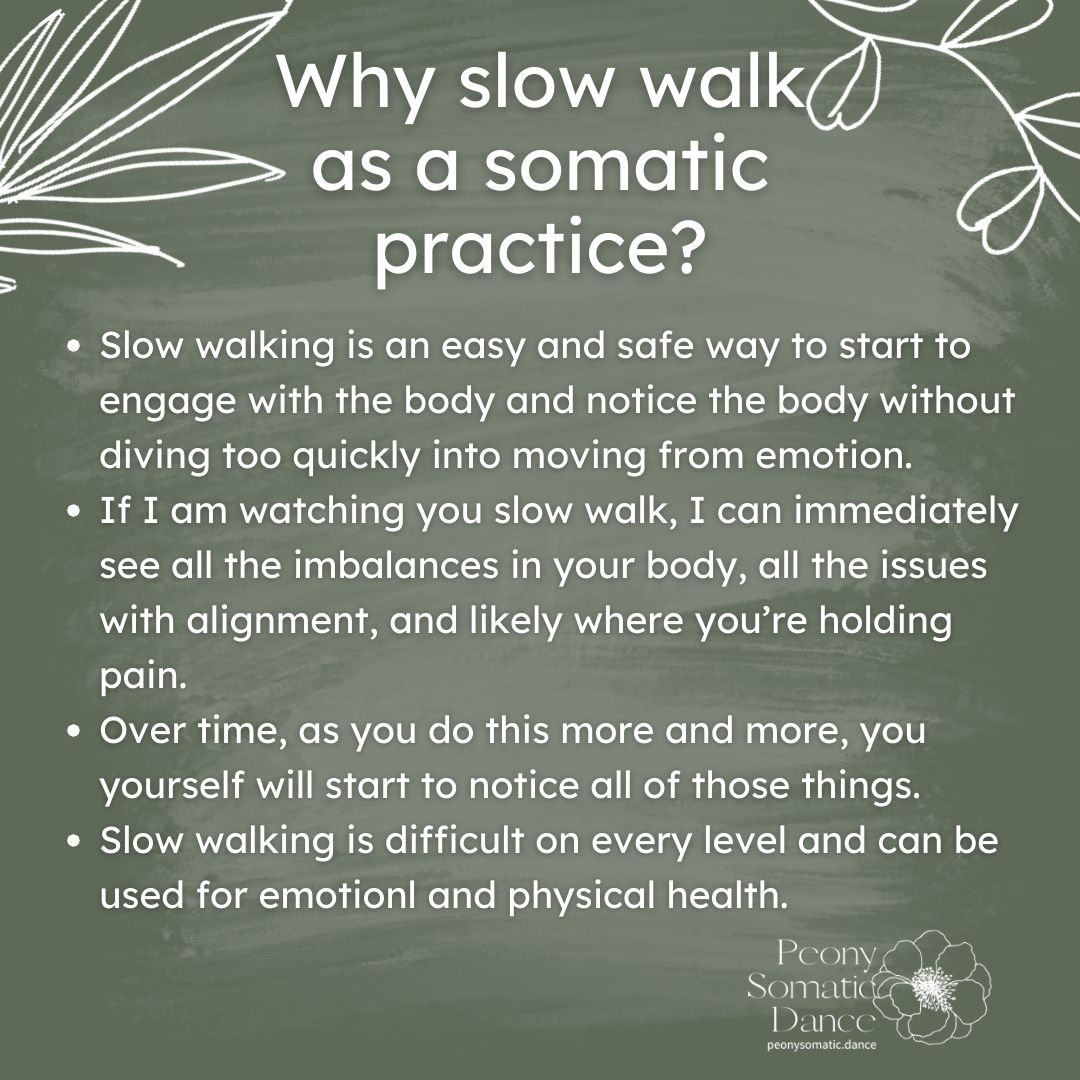
Slow Walking

Slow walking comes directly out of my Butoh studies and practices, and I think it is one of the most important fundamentals in all of the methods of Peony Somatic Dance. There are so many variables that we can play with here. It’s really never-ending.

Out of the all of the practices, the widest range of humans declare this to be their favorite — from the kids I taught in residential schools to elder dancers and everyone in between.

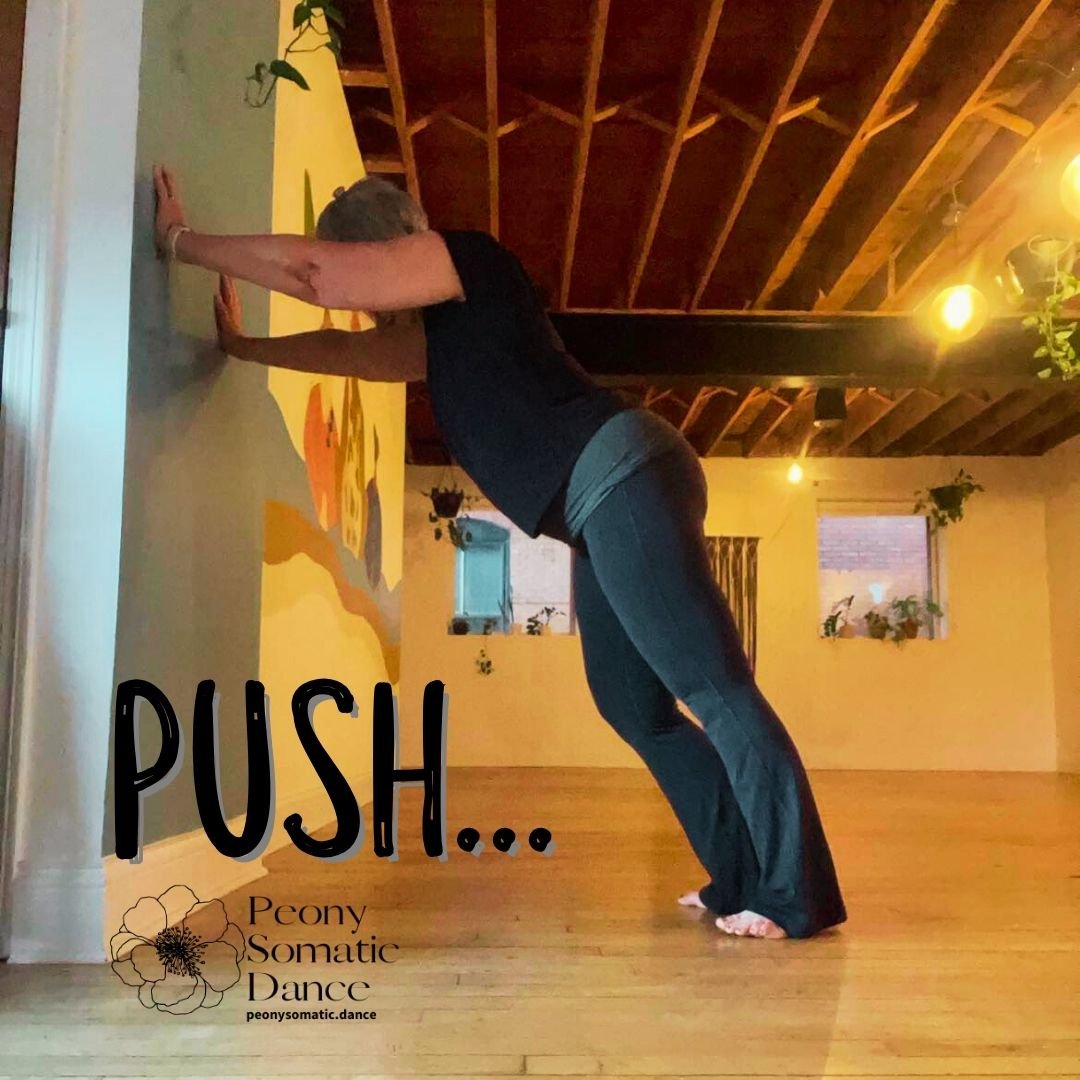
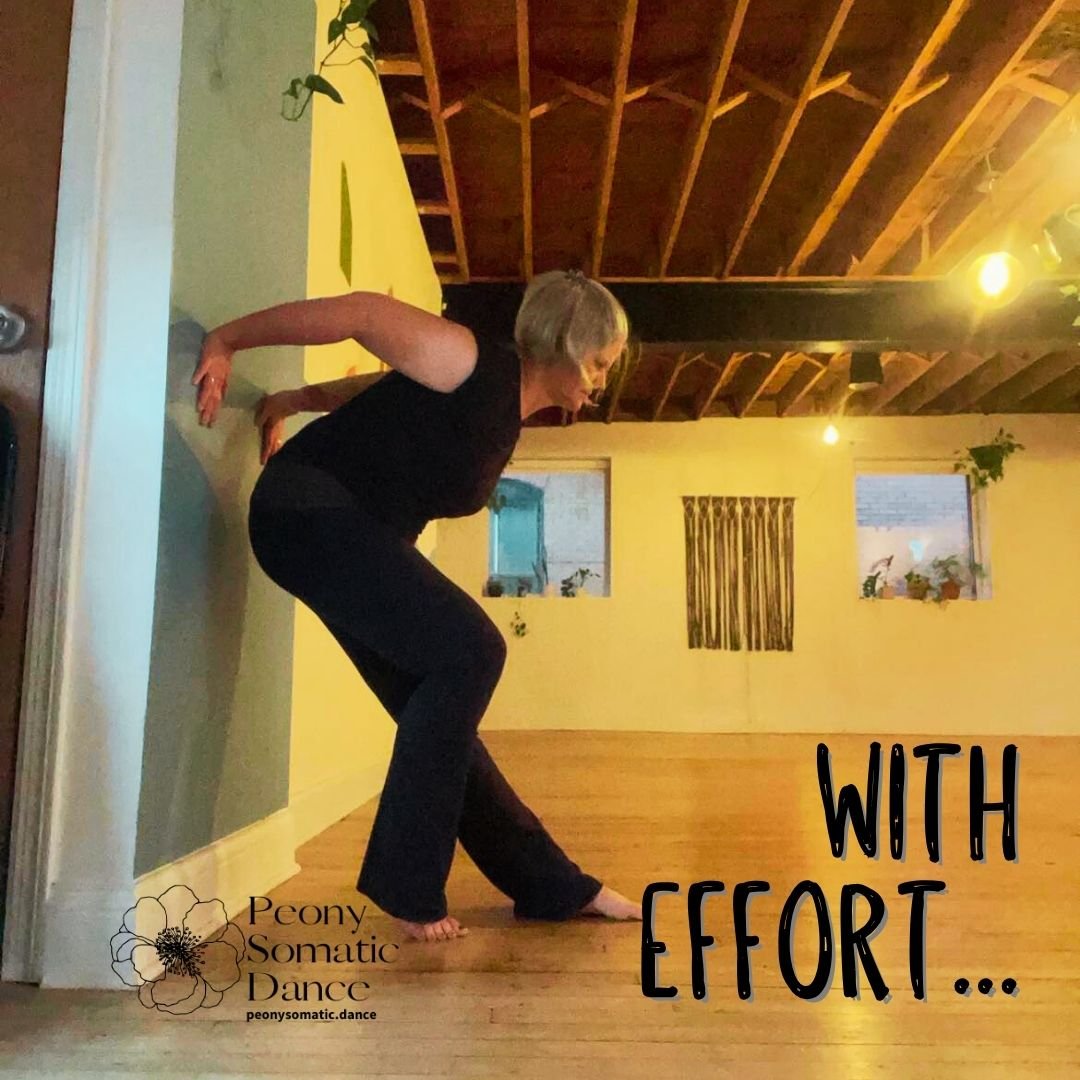
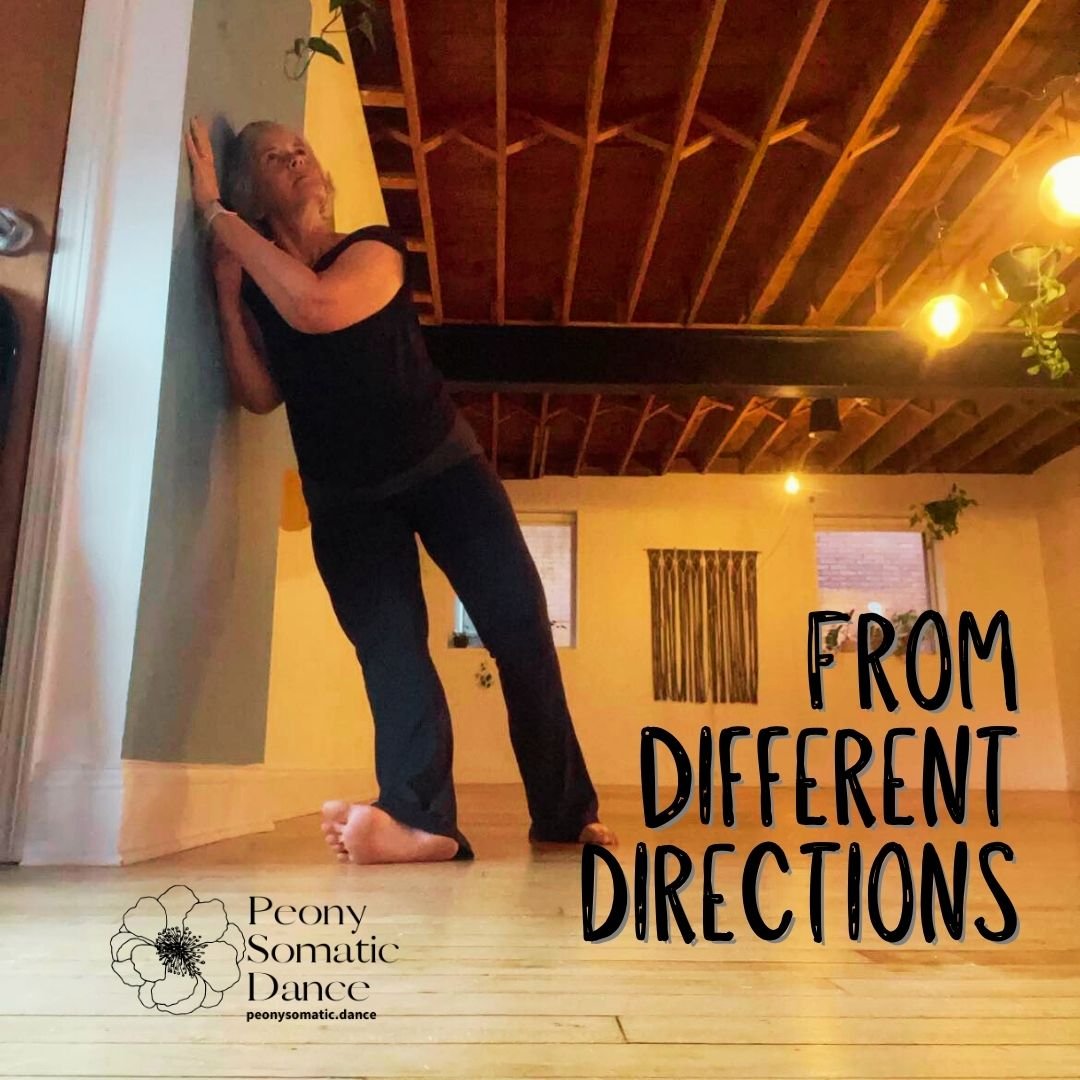
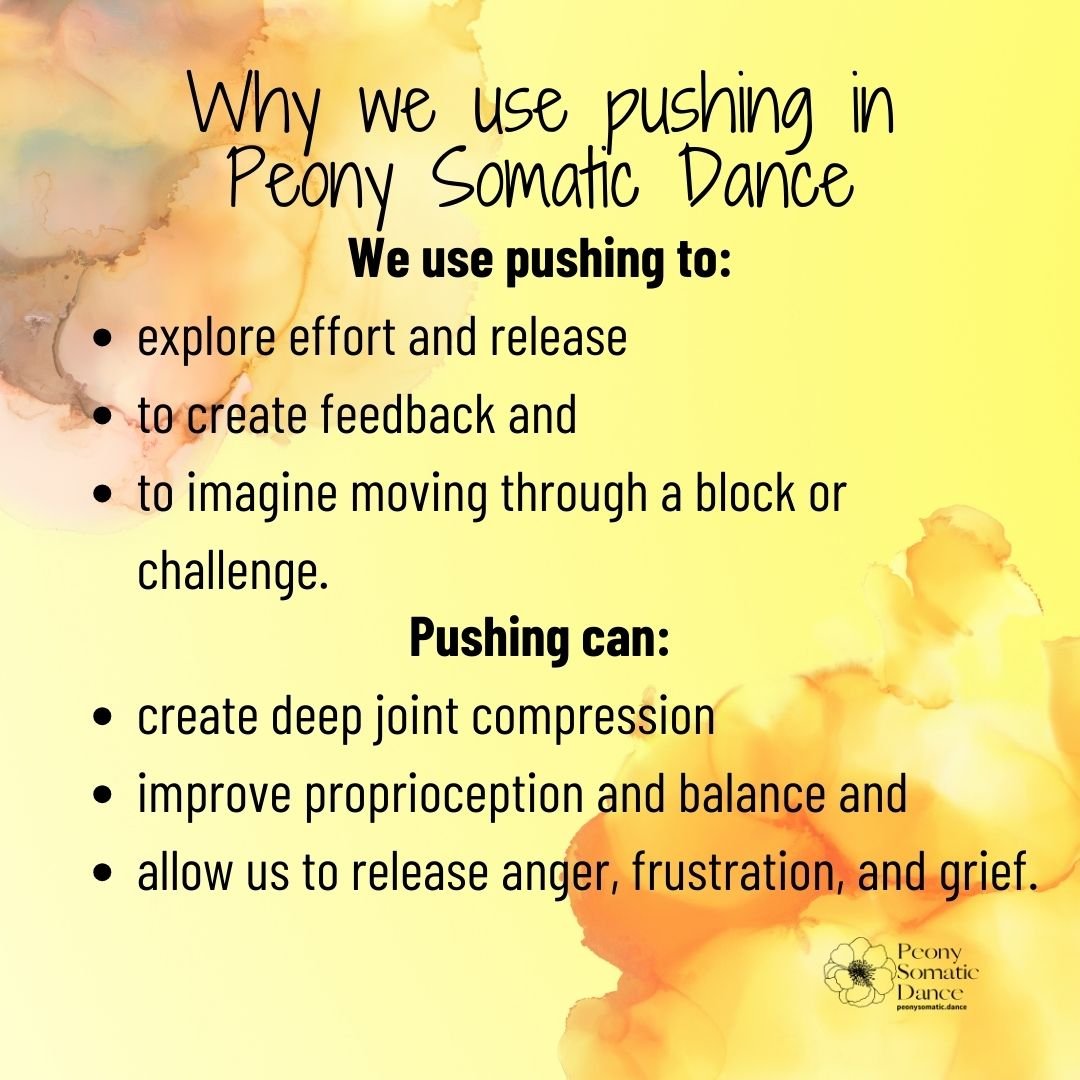
Pushing

If you’re feeling frustrated in particular, there’s nothing quite like pushing. Approach the wall in all its metaphorical glory and imagine you truly can push it down or push through it.

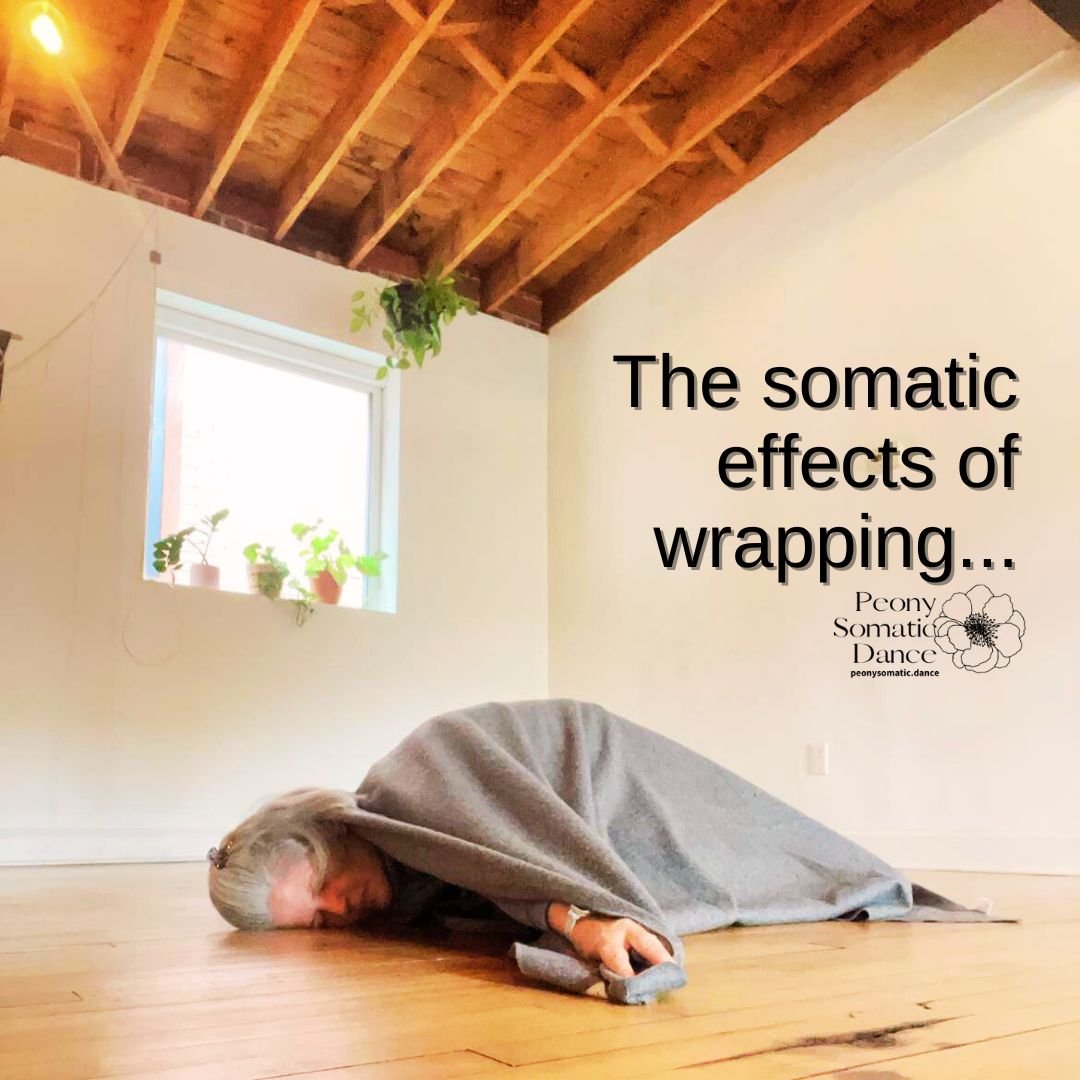
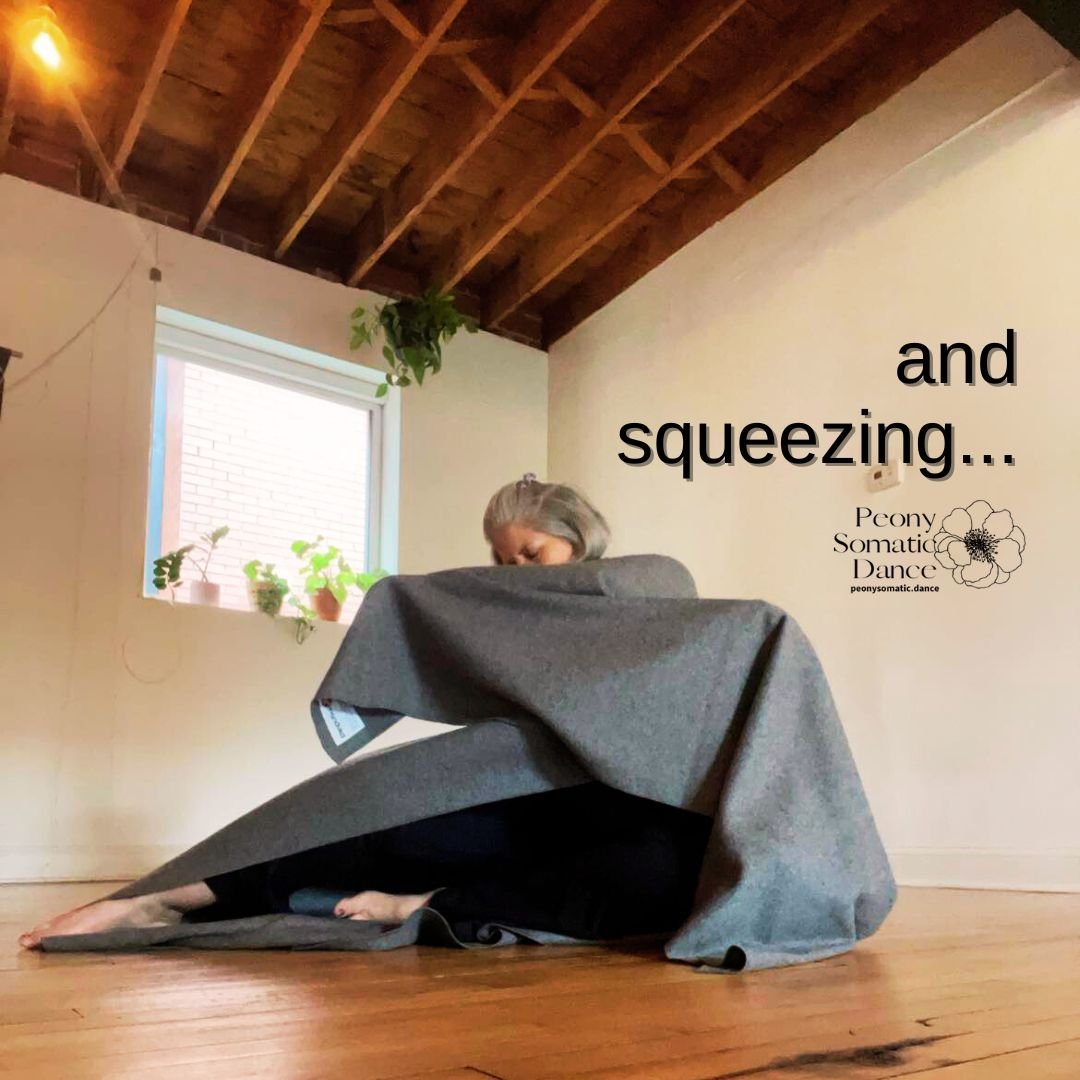
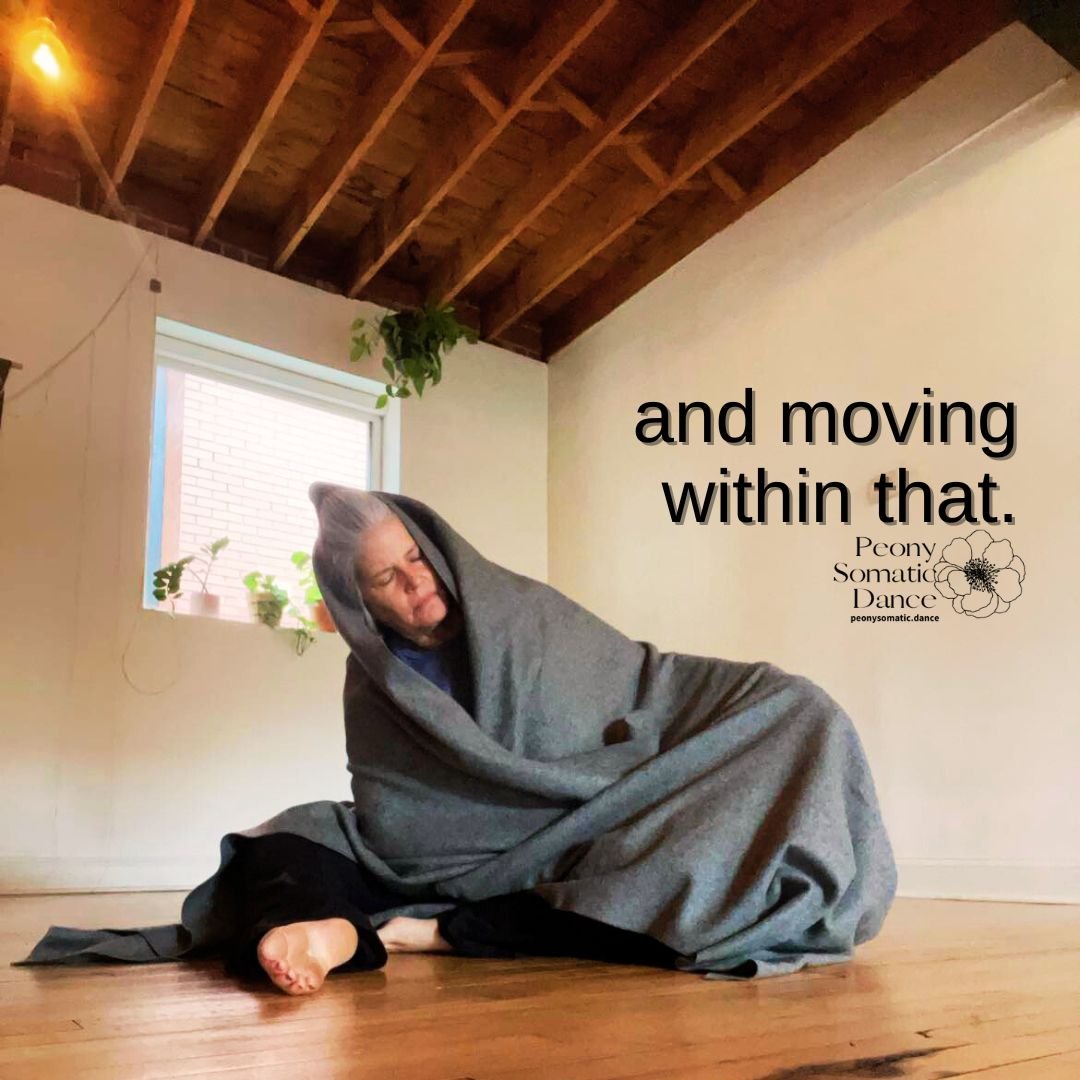
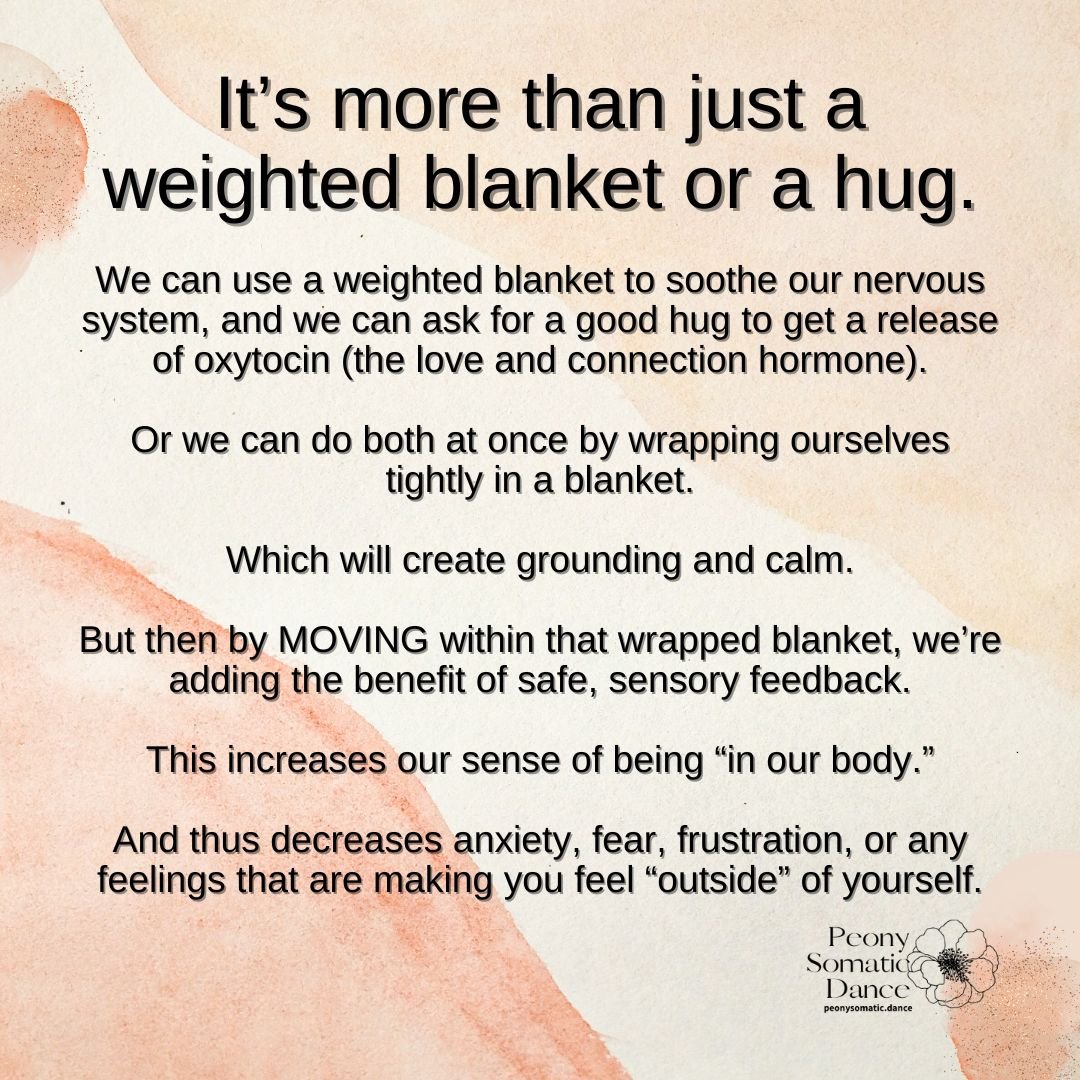
Wrapping

If you are feeling overstimulated or having some issues with dissociation, wrapping is so freaking helpful. Like I say here, it’s more than just a weighted blanket or a good firm hug. And one of the best things about it, of course, is that you’re totally in control of pressure and tightness.

Journaling, Peony Bodyparts, and When We Feel Too Much

These are two stories that are connected in ways that I could not have imagined as they were both happening, which was in about a two week time span.

Journaling

When I met Craig, I was in the middle of the biggest clearing of my life. My house was utterly empty except for things I used day to day and found enjoyment in. There was so much space and it was a beautiful thing.

But in the garage there were a few boxes that were like energy black holes. They contained about 45 full journals from over 20 years of writing. I knew they had to go. They were repetitive and I found them, frankly, embarrassing as I was moving past the need to so closely examine, over and over, the same wounds. (That work was important as I was doing it.)

I threw them out. It was too much to burn in a small city with rules about such things. When they were gone, I could feel another clear space in my life and it was good.

Fast forward and I’ve been trying to get back into journaling. I’m a writer. It’s good to brain dump.

But over the last couple of years I just can’t. No matter how I tried to approach it, it wasn’t working.

Every time I sat down to journal, thinking about how full my brain felt and how much I had to say — how much I wanted to say — I would put pen on to paper and within a few sentences feel this overwhelming bodily exhaustion. I was lucky if I filled a page.

Knowing how I do that it’s important to be writing by hand to get the full somatic/trauma-informed expressive arts therapy benefits of journaling, I kept refusing to try it a different way. (I am so freaking stubborn.)

But I finally gave in. I was desperate to start journaling once I got back into talk therapy. It is so important to have a space to track things.

So I got an app (Day One). I can use it on any of my computers or devices and it syncs across them.

And lo and behold, I have been writing like mad. I’m on day 31 of no days missed and some days I write twice.

Peony Bodyparts

My students in Columbus are, of course, very new to me and my methods, and it has been a joy to go on this journey with them. It’s like learning and understanding and really seeing my processes with new eyes.

One of my students, who is a therapist herself so she’s trauma informed, said to me one day out of the blue: Bodyparts are my favorite.

Now I love Bodyparts. I love it for the concrete way it gets you into your body and ready for more. I’ve always seen it as a logical and needed sort of “warm up.”

I don’t think anyone has ever told me it’s their favorite part of class. There’s so much to a Peony Somatic Dance class that is … well, freaking fancier or even plain old weirder.

The somatics of it all

I was talking to Deb Globus about the journaling issue because she’s the Queen of Journaling, and she said something that was such a huge wake up call.

I will paraphrase but she said, “So writing by hand was putting you into nervous system overload… thus the exhaustion, and by typing, you got rid of that aspect but you can still benefit from getting all the words out.

MY. GOD. THAT.

THEN…

I asked my student why she loved Bodyparts so much and again paraphrasing:

Because I can explore my physical body but not get too deeply into the emotional stuff right off the bat…

Again… Bodyparts (like typing a journal) removes some of the somatic intensity of the work, and that allows us to get some of the best parts of these tools without dysregulating our nervous systems.

What this might mean for you

Sometimes we really can go at things too directly and too hard.

It’s truly a lot of what the Peony methods are about… I mean them to be gentle and I mean them to be modified in ways that make them appropriately gentle to each person’s needs.

But still… we think, THIS IS THE HEALING WORK! GET AT IT!

Then our bodies send us messages that it’s too much, which we often read as STOP.

But instead of stopping, we really need to just reevaluate and see how we can take things down a couple of notches.

The work is good and it deserves our best effort. But we also deserve self-compassion and patience.

(If you’re having an issue like this and need some help creating the “notches down” approach, don’t hesitate to write to me.)